Computational Materials Science Group
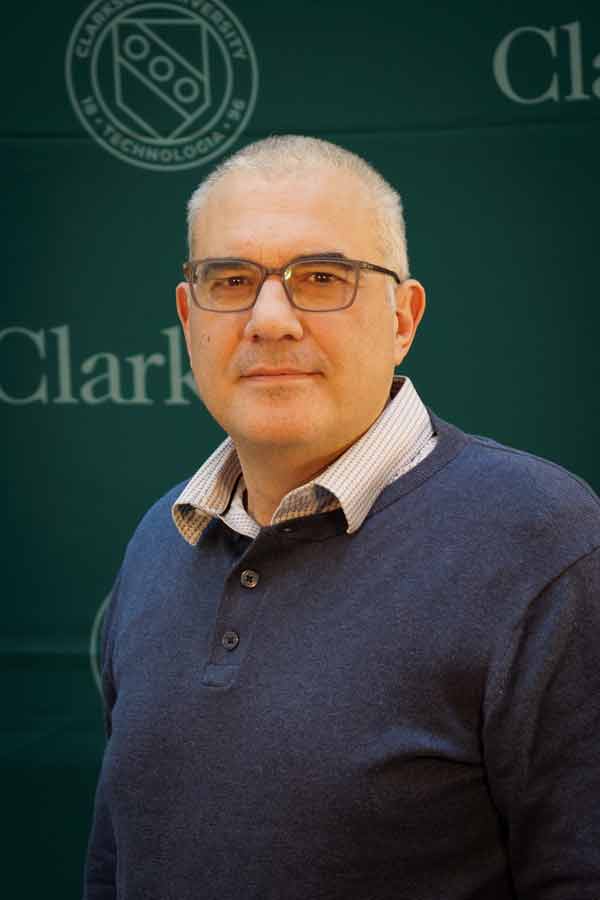
Ioannis Mastorakos, Ph.D.
Associate Professor, Mechanical & Aerospace Engineering
MAE Program Lead, Clarkson University
We use molecular dynamics, dislocation dynamics, crystal plasticity, and finite element methods, alone and coupled across length scales, to predict how defects control the strength and deformation of metallic materials.
846
Citations
15
h-index
22
i10-index
55
Publications
Citation metrics: Google Scholar, October 2026. Publication count: full list.
About
Simulation-driven design of stronger metals
Ioannis Mastorakos is an Associate Professor in the Department of Mechanical and Aerospace Engineering at Clarkson University and, since July 2026, the MAE Program Lead. He received a B.Sc. in Physics (1994) and a Ph.D. in Engineering (2004) from Aristotle University of Thessaloniki, Greece, and worked as a consultant at Hyperco in Thessaloniki from 2002 to 2004.
In 2004 he joined the School of Mechanical and Materials Engineering at Washington State University as a Research Associate, later serving as Visiting Assistant Professor (2008) and Clinical Assistant Professor (2011). He joined Clarkson in 2014 as an Assistant Professor and was promoted to Associate Professor in 2020. His group studies plasticity in high-entropy alloys, polycrystals, and nanostructured metals, combining atomistic and mesoscale simulations with machine-learning surrogates and experimental validation.
Professional service. TMS Composite Materials Committee: Secretary (2019–2022), Vice-Chair (2022–2024), Chair (2024–2026), and currently JOM Advisor; member of the TMS Awards Committee (2020–2023) and JOM topic editor (2023). Co-editor of Composite Materials: Sustainable and Eco-Friendly Materials and Applications (TMS/Springer, 2024). Symposium organizer at Materials Science & Technology (MS&T) 2017 and 2020 and the International Conference on Plasticity 2011, and organizer of four symposia at the TMS Annual Meetings (2023–2026): three on eco-friendly composite materials and one on additive manufacturing of composite metallic materials, and member of the organizing committees of four international and national conferences. Proposal reviewer for NSF and for the DOE Nuclear Energy University Program and Basic Energy Sciences. Journal reviewer, with 65 manuscript reviews since 2018 (Web of Science), for Scripta Materialia, Modelling and Simulation in Materials Science and Engineering, Journal of Nuclear Materials, Journal of Engineering Materials and Technology, and others. Member of ASME, MRS, and TMS.
Research Areas
What we study
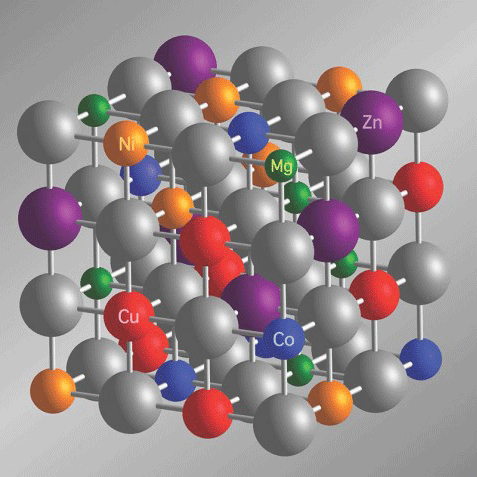
High-Entropy Alloys
Nanoindentation simulations of incipient plasticity, and deformation and failure of additively manufactured AlCoCrFeNi alloys.

Dislocation Dynamics & Crystal Plasticity
FFT-based crystal plasticity coupled with continuum dislocation dynamics (EVPFFT-CDD) to link dislocation patterning to hardening.
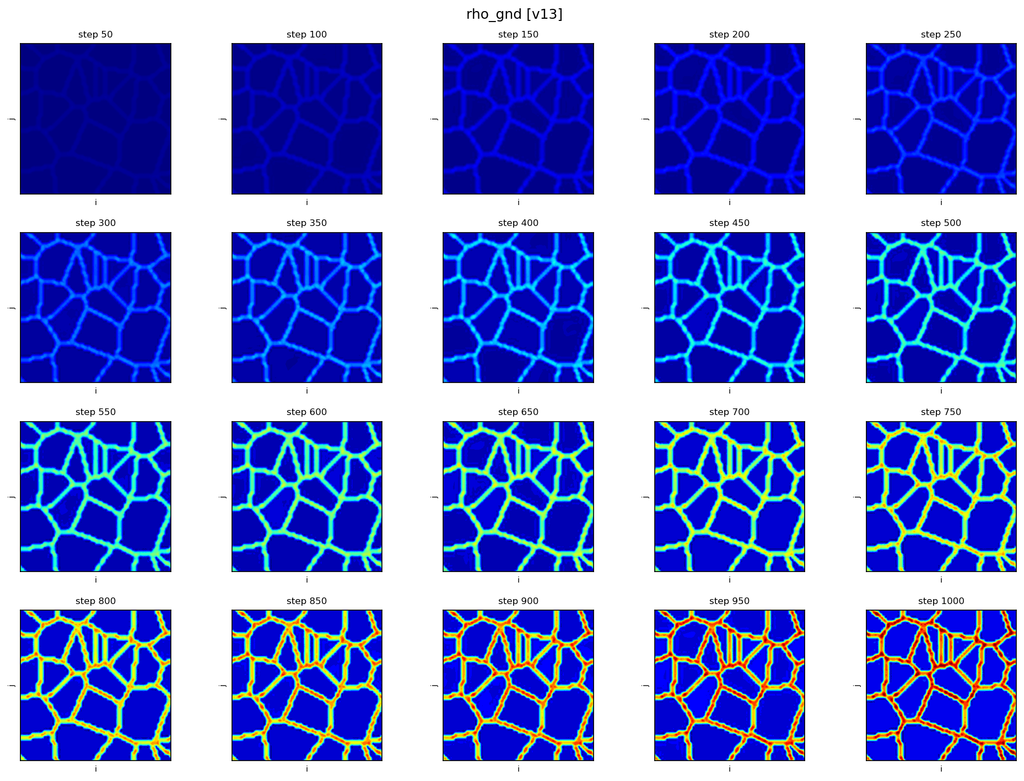
Machine-Learning Surrogates
Neural operator models that predict full-field stress, strain, and dislocation density evolution at a fraction of the solver cost.
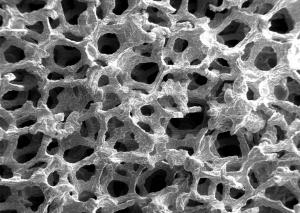
Nanofoams & Nanoscale Multilayers
Ligament- and interface-controlled strength of Cu/Ni nanofoams, nanolaminates, and core-shell nanowires.
Recent Publications
Latest from the group
2026
O. Oyerinde, P. Yuya, A. Achuthan, and I. Mastorakos, “Deformation mechanisms and failure behavior of binder jetting manufactured AlCoCrFeNi high-entropy alloy,” Journal of Materials Science, 61(7), 4721–4739.
2024
O. Oyerinde, I. Mastorakos, A. Achuthan, and P. Yuya, “Comparative investigation of process-induced transformations and diffusional mechanisms in additively manufactured AlCoCrFeNi high-entropy alloy,” Metallography, Microstructure, and Analysis, 13(6), 1179–1196.
2024
G. Ayoub, O. A. A. Modad, A. H. Kobaissy, M. Shehadeh, and I. Mastorakos, “Strain hardening and microstructure evolution in ECAP-processed ultrafine-grained metals: a comparative study of copper, aluminum, and magnesium alloys,” Journal of Materials Science, 59(12), 4995–5024.
Contact
Get in touch
Questions about research collaborations or the MAE program are welcome by email.
Email
imastora@clarkson.edu
Phone
315-268-7731
Office
251 CAMP Building, Clarkson University
CU Box 5725, Potsdam, NY 13699