Outsiders
While invasive species such as the Norway Maple and Black Locust are not native to St. Lawrence County, they have been retained in limited areas of the arboretum for educational purposes and to prevent soil disturbance that would result from full removal. They also add diversity to the arboretum and highlight human influence on plant distribution. Their presence provides opportunities to teach visitors about the ecological impacts of invasive trees and the importance of biodiversity management.
| Species | Invasive Status | Notes |
| Norway Maple (Acer platanoides) | Invasive | Non-native from Europe; outcompetes native maples and shades out understory plants. |
| European Buckthorn (Rhamnus cathartica) | Invasive | Highly invasive shrub/tree; forms dense thickets that crowd out natives. |
| Japanese Honeysuckle (Lonicera japonica) | Invasive | Non-native vine; smothers vegetation and trees. |
| Black Locust (Robinia pseudoacacia) | Locally Invasive | Native to parts of the U.S. but not native to northern NY; spreads aggressively and alters soil nitrogen. The Grounds Crew has discussed how this tree should not be treated as harshly, due to its history at Clarkson. The species was likely planted here by either the Clarkson Family or an early land owner. |
| Narrow Leaf Willow (likely Salix exigua or non-native hybrid) | Potentially Invasive | Some non-native willows can spread rapidly; depends on exact species. |
| Apple (Malus domestica) | Non-native but not strongly invasive | Naturalized; not usually considered ecologically harmful. |
| Blue Spruce (Picea pungens) | Non-native (Rocky Mountains) | Not invasive, but not native; often planted ornamentally. |
| Virgin’s Bower (Clematis virginiana) | Native — but note that Clematis terniflora (Sweet Autumn Clematis) is invasive. Make sure of the species. |
Nonnative versus Invasive
Nonnative (or Exotic) Species
- A nonnative species is a plant, animal, or other organism that does not naturally occur in a specific region
- It was introduced from another area, either intentionally (like ornamental trees) or accidentally
- Not all nonnative species are harmful. Some coexist without causing problems
Example: Norway Maple (Acer platanoides) is nonnative to North America, but it doesn’t always aggressively take over ecosystems
Invasive Species
- An invasive species is a nonnative species that spreads rapidly and causes harm to the environment, the economy, or to human health
- Invasive species outcompete native species, reduce biodiversity, and can alter ecosystems
Example: European Buckthorn (Rhamnus cathartica) is invasive in New York because it grows densely, shades out native plants, and disrupts forest habitats
Key Difference
- All invasive species are nonnative, but not all nonnative species are invasive
- Being nonnative is about origin, while being invasive is about impact
Fire Safety in the Arboretum
Forest fires are a natural part of some ecosystems, but in the arboretum, they can cause significant damage to trees, wildlife, and trails. Understanding how fires start and how to prevent them helps protect our green spaces for future generations.
How Fires Harm the Arboretum
- Destroys trees and vegetation – even mature trees can be damaged or killed
- Disrupts wildlife habitats – birds, mammals, and insects lose shelter and food
- Damages soil and waterways – intense fires can erode soil and harm nearby streams
- Destroys educational and recreational spaces – trails, signs, and research areas are impacted
Common Causes of Fires
- Human activity – unattended campfires, discarded cigarettes, fireworks, and outdoor grilling
- Equipment sparks – chainsaws, mowers, or other tools that produce heat or sparks
- Natural causes – lightning strikes, extremely dry conditions, or high winds
- Illegal activity or vandalism – setting fires intentionally on trails or near buildings
How to Avoid Fires
- Never leave fires unattended; use designated fire pits if allowed
- Properly extinguish cigarettes or matches
- Avoid using fireworks or equipment that could spark flames near the trail
- Report any smoke or fire to local authorities immediately
- Follow all posted trail rules and seasonal fire warnings
Fire History on the Munter Trail
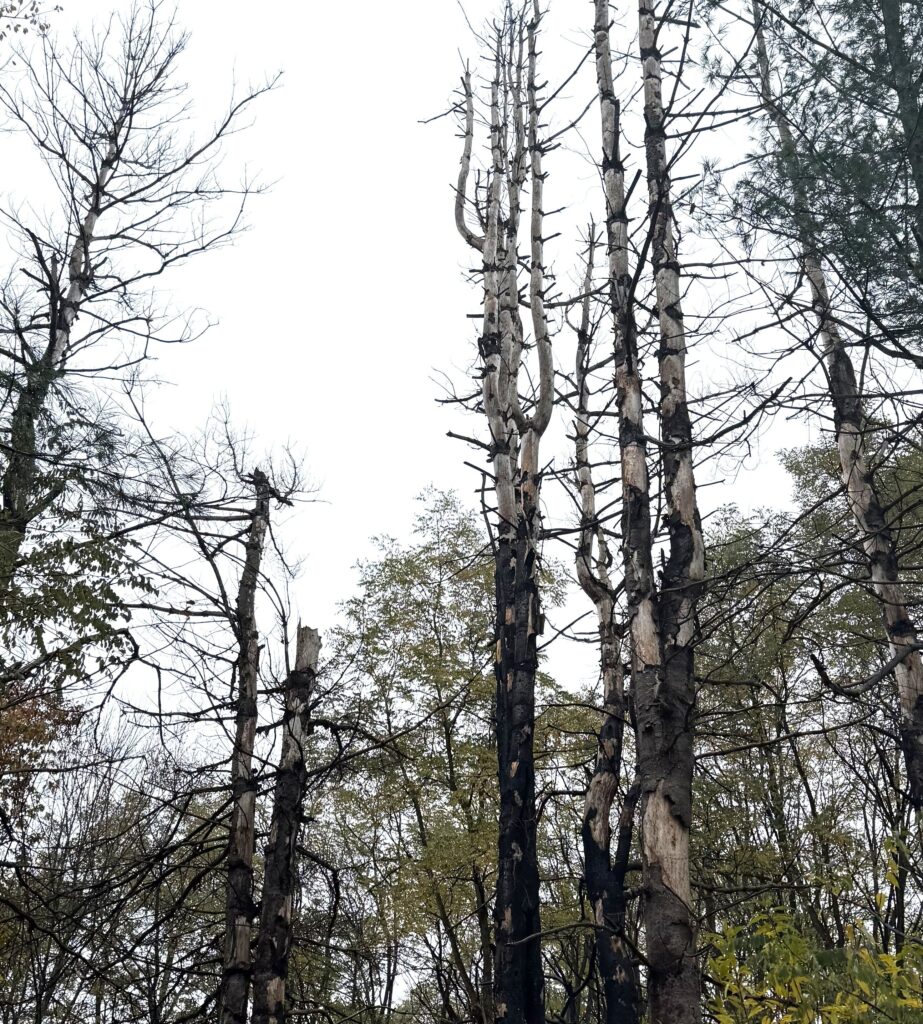

A small fire occurred along the Munter Trail (photo below), behind the Riverside Apartments. It was started due to a bonfire that was being had while it was windy, which damaged some of the forest floor and a few smaller trees. Fortunately, no major structures were affected, and recovery efforts included:
Removal of burned debris
Trail Restoration
Planting replacement trees and monitoring regrowth
This event highlights the importance of fire awareness and prevention in the arboretum. Even a small fire can disrupt the ecosystem and recreational use of the trails.
How You Can Help
- Stay on marked trails
- Follow safety guidelines and seasonal advisories
- Educate friends and visitors about fire safety
- Volunteer in restoration and monitoring programs to help the forest recover
By practicing fire safety, we can ensure that the Munter Trail and the arboretum remain safe, beautiful, and educational spaces for everyone.
Reference:
Learn – Invasive & Non-Native Species (U.S. (2020, December 3). National Park Service. Retrieved October 23, 2025, from https://www.nps.gov/subjects/invasive/learn.htm
Managing Fire | US Forest Service. (n.d.). USDA Forest Service. Retrieved October 23, 2025, from https://www.fs.usda.gov/science-technology/managing-fire
Simpson, A., Wiltermuth, M., & Dorado, M. (n.d.). What is an invasive species and why are they a problem? USGS.gov. Retrieved October 23, 2025, from https://www.usgs.gov/faqs/what-invasive-species-and-why-are-they-a-problem